MSU at 2026 MI-AMTE CAC Conference
 The 2026 MI-AMTE CAC (Michigan Association of Mathematics Teacher Educators Conversations Among Colleagues)
conference will take place on Saturday, March 14th (Pi Day) at Wayne State University in Detroit, Michigan from 8:30am-5:00pm. The conference
theme, Empowering Teachers to Flourish, aims to engage teacher educators, mathematicians, and teachers to explore and examine
professional learning opportunities so mathematics teaching and learning environments
flourish.
The 2026 MI-AMTE CAC (Michigan Association of Mathematics Teacher Educators Conversations Among Colleagues)
conference will take place on Saturday, March 14th (Pi Day) at Wayne State University in Detroit, Michigan from 8:30am-5:00pm. The conference
theme, Empowering Teachers to Flourish, aims to engage teacher educators, mathematicians, and teachers to explore and examine
professional learning opportunities so mathematics teaching and learning environments
flourish.
This event will bring together a diverse group of educators, researchers, and professionals from across the state, providing a platform to discuss the latest trends, research, and strategies in mathematics teacher education.
 The MI-AMTE organization consists of professionals committed to advancing all facets of high-quality mathematics
teacher education across Michigan. Its primary mission is to foster collaboration
among educators at all levels to enhance the teaching and learning of mathematics.
Membership is open to anyone professionally engaged in the preparation and ongoing
development of mathematics teachers, including researchers, professors, graduate students,
teacher-leaders, and mathematics coordinators at the school or district level. Through
workshops, presentations, and networking opportunities, MI-AMTE aims to support the
professional growth of those involved in mathematics education, fostering a community
that shares resources and best practices to improve math instruction and student achievement
throughout the state.
The MI-AMTE organization consists of professionals committed to advancing all facets of high-quality mathematics
teacher education across Michigan. Its primary mission is to foster collaboration
among educators at all levels to enhance the teaching and learning of mathematics.
Membership is open to anyone professionally engaged in the preparation and ongoing
development of mathematics teachers, including researchers, professors, graduate students,
teacher-leaders, and mathematics coordinators at the school or district level. Through
workshops, presentations, and networking opportunities, MI-AMTE aims to support the
professional growth of those involved in mathematics education, fostering a community
that shares resources and best practices to improve math instruction and student achievement
throughout the state.
Conversations Among Colleagues was designed in 2003-04 to facilitate conversations between and among mathematicians, mathematics educators and leaders in mathematics education. In 2015, Conversations Among Colleagues became the official conference of the Michigan Association of Mathematics Teacher Educators (MI-AMTE).
The MSU graduate students and faculty who will be presenting at Saturday's conference are AJ Edson, Ashley Fabry, Kira Morris, Betty Phillips, Sasha Rudow, and Yvonne Slanger-Grant.
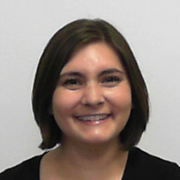 PRIME’s own PhD student, Ashley Fabry, is a graduate representative on the conference
committee and wanted to share her experiences as a committee member. She noted, “MI-AMTE
CAC is a great conference for having discussions with local mathematics teacher educators.
Since the presentations are conversation focused, I can get feedback on how others
may take up my ongoing research and learn from what others are doing in their work
with pre- and in-service teachers. This year I also served on the MI-AMTE board as
the graduate student representative. It has been helpful to learn about how to organize
and lead these types of local organizations and conferences. I have enjoyed meeting
other mathematics teacher educators, and I have the pleasure of hosting the graduate
student mixer after the conference where I can get to know other mathematics education
graduate students in the state.”
PRIME’s own PhD student, Ashley Fabry, is a graduate representative on the conference
committee and wanted to share her experiences as a committee member. She noted, “MI-AMTE
CAC is a great conference for having discussions with local mathematics teacher educators.
Since the presentations are conversation focused, I can get feedback on how others
may take up my ongoing research and learn from what others are doing in their work
with pre- and in-service teachers. This year I also served on the MI-AMTE board as
the graduate student representative. It has been helpful to learn about how to organize
and lead these types of local organizations and conferences. I have enjoyed meeting
other mathematics teacher educators, and I have the pleasure of hosting the graduate
student mixer after the conference where I can get to know other mathematics education
graduate students in the state.”
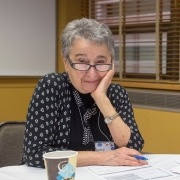 MSU PRIME faculty member, Betty Phillips, reminisced about how MI-AMTE got started.
“As I recall, in the early 2000s Sharon Senk, Glenda Lappan (both former PRIME faculty),
myself, Rheta Rubenstein from University of Michigan Dearborn, and Char Beckman from
Grand Valley [State] University had several conversations about the possibility of
starting an informal discussion group among MI mathematics educators called Conversation
Among Colleagues (CAC). This resulted in a CAC conference at Grand Valley in 2004.
It continued annually. But in 2015, the CAC became the official conference of the
Michigan Association of Mathematics Teacher Educators (MI-AMTE). So, CAC is now part
of MI-AMTE.”
MSU PRIME faculty member, Betty Phillips, reminisced about how MI-AMTE got started.
“As I recall, in the early 2000s Sharon Senk, Glenda Lappan (both former PRIME faculty),
myself, Rheta Rubenstein from University of Michigan Dearborn, and Char Beckman from
Grand Valley [State] University had several conversations about the possibility of
starting an informal discussion group among MI mathematics educators called Conversation
Among Colleagues (CAC). This resulted in a CAC conference at Grand Valley in 2004.
It continued annually. But in 2015, the CAC became the official conference of the
Michigan Association of Mathematics Teacher Educators (MI-AMTE). So, CAC is now part
of MI-AMTE.”
There is also a free pre-CAC conference workshop on Friday, March 13th: Transforming Michigan Mathematics Teacher Preparation for a Data Science & Statistics Future. The workshop schedule provides details of the talks and sessions on Friday. However, the workshop is currently full - no more registrations will be accepted.
Read about the MSU presentations on Saturday below.
MSU Presentations (Saturday, March 14th only)
Session 1 (10:45am-11:30am); Room 171
Are We Preparing Michigan Teachers for Today’s and Tomorrow’s Challenges?
Presenters: AJ Edson, Yvonne Slanger-Grant, Betty Phillips (and others)
This session explores how targeted professional learning for preservice and inservice teachers in Michigan supports teacher preparation in mathematics education. Panelists share research and practice insights, participants contribute their perspectives, and together we engage in a whole-group conversation about strategies for meeting current and future classroom challenges.
Session 2 (11:45am-12:30pm); Room 149
Performative Authority in Mathematics Education
Presenter: Sasha Rudow
Performative, or engagement, authority is a subset of authority that mathematics teachers can actively leverage. In this session, we will engage in conversation surrounding our own classroom experiences regarding authority and design a product that will support our practice, and consequently our students, in flourishing.
Session 3 (1:30pm-2:15pm); Room 169
Using Critical Reflection as a Lens for Designing Mathematics Teacher Education
Presenter: Ashley Fabry
In this session we will discuss the critical reflection process and how it may be used in designing mathematics teacher education. Participants will work together to design a plan to use this process in their work with pre- and in-service teachers.
Session 4 (2:30pm-3:15pm); Room 169
Seeing Mathematics Differently: Visual and Gestural Meaning-Making in the Classroom
Presenter: Kira Morris
What happens when mathematics is communicated through the body? This session centers gesture and visual representation as powerful tools for mathematical meaning-making. Participants design embodied representations of mathematical ideas and consider how these practices shape teaching and learning.