PRIME at CREATE for STEM Institute’s 2026 Mini-Conference
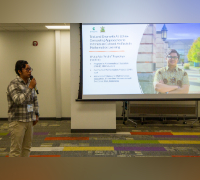
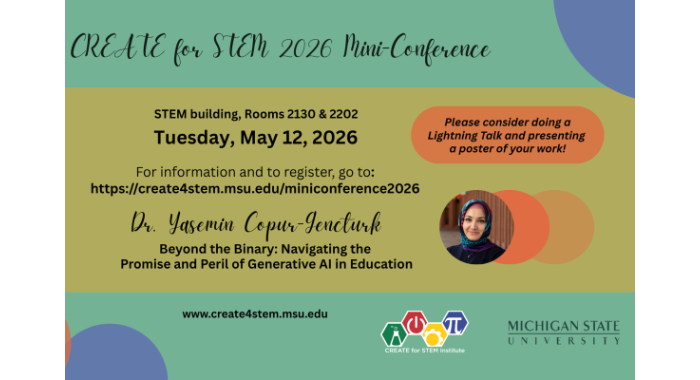
The MSU CREATE for STEM Institute held its 11th mini-conference on May 12, 2026, in the STEM Teaching & Learning building on campus. CREATE for STEM hosts, sponsors and supports STEM education research happenings around MSU. There were two new and exciting things about this year’s program: 1) the keynote speaker is a mathematics scholar and 2) “lightning talks’, or three-minute speed talks, were added to the mini-conference experience prior to the poster session.
CREATE for STEM is a Michigan State University-sponsored research institute with a broad mandate for Collaborative Research in Education, Assessment and Teaching Environments for the fields of Science, Technology, Engineering and Mathematics. The Institute is a collaboration between the Colleges of Education and Natural Science in coordination with the Office of the Provost.
Their goals are to improve teaching and learning in the STEM disciplines for students from grades K-16 through research and development efforts. They bring together STEM faculty at Michigan State University and faculty to serve as a springboard and a hub for innovation, research, and intellectual collaboration. Together, they generate ideas and projects that will make a difference in the teaching and learning of STEM for all learners. Within the STEM education fields, they aim to:
- Innovate by being on the forefront of developing new curriculum materials, use of technology, professional development, policy approaches, and research methods to improve teaching and learning;
- Investigate by researching the effectiveness of innovations in the fields of STEM education and using research to inform and improve all aspects of education delivery and assessment; and
- Inform by publishing research and other materials to researchers, teachers, scientists, and policymakers to support continued improvement in both understanding and outcomes in the field.

PRIME students and faculty members that participated either as presenters, moderators,
or panelists were Ayesha Bundy, Maria Cruciani, AJ Edson, Ahmad Kohar, Andre Payadnya, Betty
Phillips, Matt Voigt, and Sabrina Zarza. Several other students and faculty attended.
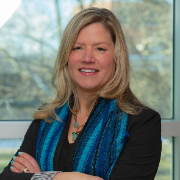
The keynote speaker of the mini-conference, Dr. Yasemin Copur-Gencturk, is no stranger to MSU. Dr. Copur-Gencturk was also a colloquium speaker for the
Math Ed community earlier this spring, hosted by PRIME. Her keynote for the CREATE
for STEM Mini-Conference focused on GenAI in education. 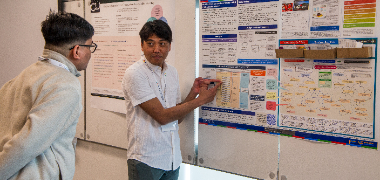
PRIME student Ahmad Kohar stated the following regarding the conference: "I love the CREATE for STEM Mini Conference because it allows me to explore and learn
from interdisciplinary fields and to see how mathematics connects across STEM disciplines.
This year’s theme on generative AI in STEM education was especially meaningful to
me because it addressed both the potential benefits and anticipated challenges of
generative AI, which closely relates to my ongoing research on the relationship between
mathematical practices and generative AI. At the conference, I presented a poster
based on my research practicum study focusing on how preservice mathematics teachers
pose context-based mathematics tasks using real world artifacts through the lens of
idea positioning. More specifically, the study examines how preservice teachers position
themselves toward AI generated ideas throughout their problem posing processes. I
am looking forward to attending future CREATE for STEM conferences." 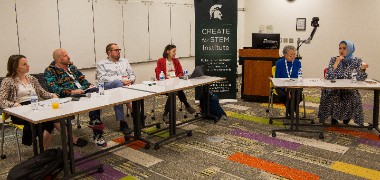
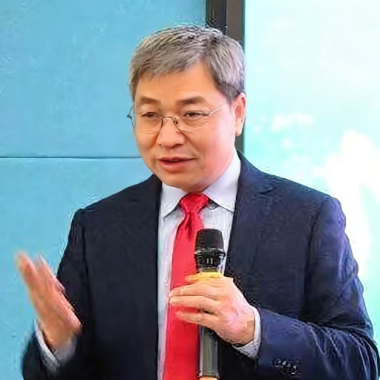
PRIME faculty member, Dr. Matt Voigt said this about his time and participation during the conference: “My time at the CREATE for STEM mini-conference was incredibly rewarding. During the poster session, I found immense joy in connecting with fellow PRIME scholars and engaging with their transformative ideas. It was inspiring to hear Sabrina Zarza and Maria Cruciani share their innovative perspectives on equity and arts-based methods in statistics, and to see Ayesha Bundy showcase her compelling practicum research project centered on joy and active learning in mathematics. Furthermore, engaging with Andre Payadnya regarding ethnomathematics in Bali was a distinct highlight; our rich dialogue surrounding cultural mathematics actually catalyzed a subsequent invited talk and a wonderful academic exchange with the Universitas Mahasaraswati Denpasar to take place this summer! Participating as a panelist for the session on generative AI was an equally powerful experience. It provided a crucial, collaborative space to move beyond binary thinking and speak openly about the pressing complexities of these rapidly evolving technologies. I deeply appreciated the opportunity to openly share my concerns regarding the broader implications of large language models, particularly the hidden environmental impacts of AI infrastructure and the critical issues surrounding algorithmic bias, late-stage capitalism, and data equity in STEM education.”

The team at the CREATE for STEM Institute will be planning to send all of the attendees a list of the poster/presenters, contact info, and a link to the actual posters soon. Past and future events hosted by CREATE for STEM can be found here.
Thank you to all who made this mini conference another great success!